Goodreads says, ”Unfortunately, for scaling reasons, the sale of new ebooks has been suspended until further notice. Only existing ebooks will still be offered for sale…”
So my website is the only place you can buy it -
Goodreads says, ”Unfortunately, for scaling reasons, the sale of new ebooks has been suspended until further notice. Only existing ebooks will still be offered for sale…”
So my website is the only place you can buy it -
Goodreads says, ”Unfortunately, for scaling reasons, the sale of new ebooks has been suspended until further notice. Only existing ebooks will still be offered for sale…”
So my website is the only place you can buy it -
A few days ago I uploaded “Slither” to Amazon Kindle. I received an email (copied below) saying they would not be offering my book for sale because “the book contains content that is in violation of our content guidelines”.
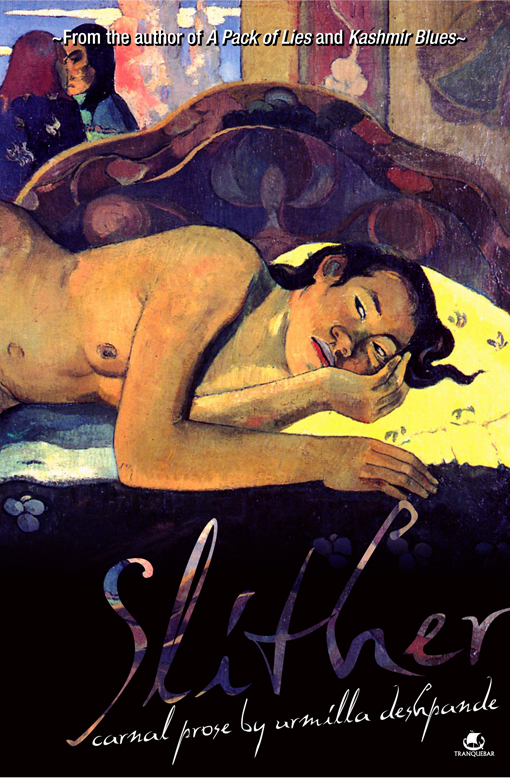
I thought maybe I was now in the revered company of George Orwell, D.H. Lawrence, John Steinbeck, Toni Morrison, and so on. But, it might just be the cover art – a Gauguin nude – that violates their guidelines. Or the fact that the title says clearly that it is carnal prose. It could even be that someone read the whole book and decided it would be a “poor experience” for other readers – they say in the guidelines “We don’t accept books that provide a poor customer experience. Examples include poorly formatted books and books with misleading titles, cover art or product descriptions. We reserve the right to determine whether content provides a poor customer experience.”
There was no explanation as to what specific content violated their guidelines, but reading through those guidelines made me reluctant to ask. They could fit my book into any of those violations, after all (Copied below).
So, I have had to put the book up for sale on my own website, it’s available for download as a PDF
Oh and, the print version is available on Amazon.
The email from Amazon:
From: Amazon.com <title-submission@amazon.com>
Date: Tue, Oct 23, 2012 at 8:02 PM
Subject: Alert from Amazon KDP To: (my email address) Hello, We’re contacting you regarding the following book that you submitted for sale in our Kindle Store:
3018507 Slither ~ carnal prose by Urmilla DeshpandeDuring our review process, we found that your book contains content that is in violation of our content guidelines. As a result, we will not be offering this book for sale.
Our content guidelines are published on the Kindle Direct Publishing website.
To learn more, please see: https://kdp.amazon.com/self-
publishing/help?topicId= Best Regards, Marigold J.A1KT4ANX0RL55I Amazon.com Your feedback is helping us build Earth’s Most Customer-Centric Company.
And here are the content guidelines:
Content Guidelines
Your books and other content (such as book titles, cover art and product descriptions) must adhere to these content guidelines. We reserve the right to make judgments about whether content is appropriate and to choose not to offer it. We may also terminate your participation in the KDP program if you don’t adhere to these content guidelines.Pornography
We don’t accept pornography or offensive depictions of graphic sexual acts.Offensive Content
What we deem offensive is probably about what you would expect.Illegal and Infringing Content
We take violations of laws and proprietary rights very seriously. It is your responsibility to ensure that your content doesn’t violate laws or copyright, trademark, privacy, publicity, or other rights. Just because content is freely available does not mean you are free to copy and sell it.Public Domain and Other Non-Exclusive Content
Some types of content, such as public domain content, may be free to use by anyone, or may be licensed for use by more than one party. We will not accept content that is freely available on the web unless you are the copyright owner of that content. For example, if you received your book content from a source that allows you and others to re-distribute it, and the content is freely available on the web, we will not accept it for sale on the Kindle store. We do accept public domain content, however we may choose to not sell a public domain book if its content is undifferentiated or barely differentiated from one or more other books.Poor Customer Experience
We don’t accept books that provide a poor customer experience. Examples include poorly formatted books and books with misleading titles, cover art or product descriptions. We reserve the right to determine whether content provides a poor customer experience.
My Marathi is good enough to talk to my sister (whose Marathi is worse than mine), and not at all good enough to read the translation.
This translation happened with my technical and legal consent. There was a clause in the contract with my publisher which allowed them to sell the translation rights. Needless to say, I learned my lesson. Neither the translator, to my shock and disappointment, nor the publisher, made ANY contact with me during the translation process. Two copies of this Marathi version arrived in my mailbox, and that was how I found out.
To start with, the title of the book translates back to English approximately as “I Will Lie” which immediately said to me that the title was chosen for market impact . It does not say what I intended. I was not, to put it mildly, delighted. I opened the book, and with some apprehension, read the acknowledgements. And at that point I figured that I would probably drop an eyeball if I read any more. There was a clear mistake in understanding what I meant by “my sisters”, and the translator has taken the liberty of assuming my meaning without bothering to check. At that point I gave up. It seems to me, from what I could tell from reviews of the book, that basically this is now a terrible book. The publisher’s blurb on the cover also sensationalizes it for no reason, as “explosive” and so forth. Sleaze.
My mother, Gauri Deshpande, worked on several translations. She talked to the authors, or, in the case of Sir Richard, did an enormous amount of research and put a lot of thought into it, sometimes agonizing over single words. Shashi Deshpande, who translated my mother’s “Deliverance”, too, did the same. I can’t understand why a translator would not even have a phone conversation with an author whose book she is translating – I am neither dead nor unapproachable.
Anyone who has actually read it in both languages, if there is such a person, I would love to hear what you have to say. Maybe it is not as terrible as I fear. But from what little I have read, I fear it is.
http://www.himalmag.com/component/content/article/4633-spanking-words.html
… Steer clear
of the opaque. Quirkiness is useful,
so is translucence. Spank
words carefully. Include
lots of skin, mouth,
tongue. However aesthetic
breasts work the best. Linger.
In her poem ‘How to Write Erotica’, Nitoo Das comes exactingly close to articulating what it is about the genre that makes it so coveted and yet so controversial, and most of all so elusive. Contrary to popular belief, a thick barrier lined with barbed wire separates erotica from pornography. If ‘pornography is the attempt to insult sex,’ as D H Lawrence suggested in his essay ‘On Pornography’, erotica is the attempt to celebrate its roots – desire. The two genres are motivated by entirely different impulses, but it is the degree to which the act of sex is alluded that demarcates the boundaries.
If there is still any confusion, the simplest rule of thumb is the level of facility it takes to dabble in either genre. Place a camera mechanically in front of a masturbating woman and you have pornography. Instead, document the sensation, the rush of blood from clitoris to head as she writhes and combusts and swims in wave after ecstatic wave until her lips contort into an open mouth, until the quivering ceases after the final gasp, the penultimate sigh. Erotica is what you will have produced. Pornography is a cakewalk. It does not necessitate the use of one’s imagination. But to write a single line of erotica from scratch, you must first create the universe.
That is precisely what Urmilla Deshpande seems to have done in Slither, her collection of erotic stories published by Tranquebar. The cover defines this body of work as ‘carnal prose’, and with every story a new dimension of this secret universe of flesh and fire unravels. The atmosphere is dense with alternating layers of desire and desperation: a single fertile river that runs underground and bifurcates into diverse streams of consciousness, infusing and irrigating everything it encompasses with passion and intrigue. The landscape is peopled with characters who live ordinary lives and who dabble routinely with the mundane, but who experience the world in all its sensual glory. But Deshpande’s true genius lies in her ability to play with the texture of language, to ‘spank words carefully’ and to create a dialogue between touch and the sensation of that touch – and, often, the longing for it. And finally, her capacity to linger in the afterglow of language so that what arouses the reader is not merely the quirkiness of the situation at hand but the symphony that her words conduct.
For instance, the title story is not so much about sex; the focus is on the impassioned lack of it. A woman of indefinite age tells us about her botanist husband, who is more aroused by Amazon gingers than her. She rants:
And still I loved his hands. I wonder what it is about him that rejects me over and over. It is not that he does not look at me. But it is not with the eyes of a lover that he sees me. It is with the eyes of a botanist. He sees my eyes – humans have two, plants none, so perhaps they do not impress him, though they are, I am told, fine eyes. He touches my skin, but with his fingertips, not his whole hands, through my clothes, not with the delight of knowing I’m right there below that layer but with some practical purpose – to guide me through some forest path perhaps, or stop me as he did that day to watch those snakes. He even lays with me, often enough that I would not notice this disinterest, but not often enough that I felt elevated above Amazon gingers.
The 18 stories spread over nearly 300 pages embody a range of characters who are, more often than not, of Indian descent, though not always located in India. Among the most notable we have the botanist’s wife, who finds herself seduced by a village chief in a village along the foothills of the Himalaya; an emotionally unavailable taxidermist who finds herself attracted to another emotionally unavailable person; a member of a family of spirits who can enter and control people’s bodies, a village girl who grows up to be an internationally acclaimed swimmer and who is desperate to lose her virginity and finally does so – at 50.
‘Goblin Market,’ Deshpande’s retelling of the eponymous poem by Christina Rosetti, is easily the most subversive. Here, the two sisters Lizzie and Laura are lovers, and the goblins in question are ravaging beasts with the power to corrupt one’s innocence.
Laura could not resist the smell of the fruit, and the goblins licking them off her, off her breasts, biting and sucking and grabbing her, and then off her cunt, they gathered around it like creatures at a watering hole, lapping, sucking, squealing and pushing each other, fighting for the juices that flowed from her.
‘Isis’ and ‘Slight Return’ are the two other strongest stories. In ‘Isis’, the narrator, a young writer, gets increasingly obsessed with the title character, a yesteryears actress whom he would keep hearing about through his grandfather, who always speaks of her lustfully. He decides to write a book based on her and finally meets this almost mythical figure, finding himself further intrigued by her grace, her beauty and her missing eye. ‘Slight Return’ is a heartbreakingly beautiful story about Suman, a middle-aged woman and victim of a bad marriage, who finds herself transfixed as she chances upon her daughter clandestinely making love to her boyfriend in the dark. Her reaction is not one of horror or shame; instead, given her own negative sexual history and her experience with rape victims and prostitutes, she finds herself strangely appreciative of her daughter’s sexuality and her ability to articulate it. The act of looking is not voyeuristic; rather, it is tempered by tenderness and wisdom.
Each story in the collection has a personality of its own. Despite the phenomenal range and variety of the plots, you find yourself relating to and remembering the context of each narrative. Moreover, there is a dexterous quality to the language, a stylistic flexibility. Deshpande juggles different techniques of narration, from first-person to third, and each voice is unique so there is no room for repetition or monotony. This is a commendable feat considering what are, in this reviewer’s opinion, the limitations of the vocabulary of the English language, particularly when it comes to describing either sex
or intimacy.
Holy well
While the Subcontinent has a rich history of erotica, most of the pre-modern erotic writing by women has been within the domain of the devotional, by Bhakti women poets like Meera and Akka Mahadevi, the 12th-century saint from Karnataka. Given this history, erotica by contemporary Indian women writers could be read in the same vein as casual sex, an indulgence, writing for pleasure, which is precisely why the Indian moral brigade got its panties in a twist when writers such as Kamala Das started to write the way she did, irreverently and indulgently focusing on her erotic self. Erotica continues to be a controversial genre, which explains most women’s preference for adopting pseudonyms. While it is acceptable for men to brag about their sexual exploits, it is still taboo for women writers. The few women who do, usually hesitate to sign their real names to their writing.
Writers who so much as hint at being sexually experienced – such as Meena Kandasamy, who openly writes about the experience of being Dalit and a woman, and Mridula Garg – often have to bear the brunt of moral hypocrisy. Writing erotica comes at the price of one’s reputation. Ruchir Joshi’s introduction to Electric Feather is testimony. Joshi explains the difficulty he experienced in soliciting stories. ‘One senior Indian writer, who writes brilliant erotics, disdained to even answer my email. Three others did variations of sputtering into their beer, “Me write porn for you!?! No fucking way!” and promptly crossed their legs, all three. One star of the firmament smiled very sweetly and said, “If I find the time, I’ll certainly think about it.”’
Deshpande is possibly the first contemporary Indian author in English to publish a collection of stories devoted entirely to the erotic. In the last two years, though, a host of writers, particularly women, have been appropriating the space of the erotic. Most significant among them is the young provocative and award-winning M Svairini, who writes the rather risqué blog, ‘The Bottom Runs the Fuck’, and who recently published a piece in The First Post in defence of a ‘Masturbat-a-thon’. In a monologue titled ‘Kaliyuga Yoni’, which was originally written to be performed as part of ‘Yoni Ki Baat’, an ensemble show conceived along the lines of Eve Ensler’s The Vagina Monologues, Svairini’s narrator personifies her vagina and simultaneously takes a stand on the much-debated issue about the use of the word cunt or even vagina in erotica.
She [my vagina] doesn’t like the word yoni; in English, it sounds spiritual and soft, new agey, shallow as a henna tattoo.
She prefers cunt, as in wet cunt, nasty cunt, naughty cunt, bad cunt, good cunt, beautiful cunt. Cunt from the Sanskrit word for well, or spring, a deep source: kund, as in kundalini. As in the word for menstrual blood: kundapushpa, flower of the holy well. Red Violent. The taste of birth and death, of origins.
Svairini is also a prominent member of an interesting online collective of Southasian writers that calls itself ‘Shameless Yonis’. Other members include Kama Spice, writer of an erotic trilogy, Kessa’s Pride and Sehra’s Honour and Tia’s War, based in a world where people shape-shift between being human and feline. Aisha Nayar, Sabah Guille and Sheherzade are the other permanent members of the collective. Every month, the blog (www.shamelessyonis.wordpress.com) features a guest writer who similarly pushes the genre to new and exciting heights.
As more and more publishers are waking up to the marketing potential of the erotica genre, more and more women are waking up to its capacity for subversion – this is especially so given the recent success of the Slut Walk phenomenon, with urban women becoming increasingly comfortable expressing their right to pleasure. Not only does it arouse and titillate, erotica also seems to offer women space to either articulate or satisfy desire, while answering 20th-century French feminist Helene Cixous’s revolutionary call to women to ‘write their bodies’.
~ Roselyn D’Mello is a journalist and writer in Delhi.
http://thebookloversreview.blogspot.com/2011/08/review-slither.html

Mail Today, New Delhi, Sunday, July 31, 2011: Between the Lines by Insiya Amir
Carnal prose is not the same as writing about sex
IT SPEAKS volumes about a writer who “came up against the poverty of the English sex vocabulary” and still wrote 100,000 words for the erotic genre. But Urmilla Deshpande’s Slither (Tranquebar, Rs.250) is not just stories about sex. Desire, at its carnal best, manifests many forms in Deshpande’s short stories. If ‘Isis’ is about a young writer’s obsession with a long-retired actress — poignantly proving that sex is what happens between the ears — then ‘Slight Return’ is about an almost-40 woman who barely had a sexual life. “I go where a situation or character lead me. Many of these stories reveal my influences. I wish it were Austen and Shakespeare, but sometimes comics or a child’s poem live in you. In ‘Goblin Market’, and ‘Malekh’, this is overtly visible. But explorations, they may be more subconscious than conscious. I just let it happen. ‘Letting’ is often the hardest part,” says Deshpande, who has also written A Pack of Lies, which, through the protagonist, Ginny, examines the ruthless and unlikely life of Mumbai in the eighties. While Ginny explores divorce, incest, friendship and sexuality, Slither is more definitively ‘carnal prose’. “Having written a book or two, I know it takes honesty and fearlessness. Writing sex is even harder: you have to squash inhibitions — sexual and social ones. You have to allow characters to act in ways they would act. You cannot think about judgment. If you care about that, better not choose this subject, or write at all,” says Deshpande, who questions whether there is a benchmark that writing about sex has to achieve.
Despite the fact that there is actually an award for Bad Sex in Fiction — whose recipients include John Updike (Lifetime Achievement), Norman Mailer, Sebastian Faulks and Tom Wolfe — Deshpande says that writing about sex is in itself a mature thing to do. “Is there a benchmark that writers have to get to? Writers write what they know, and imagine. My mother, for example, wrote frankly about sexuality, in Marathi. I can’t judge the state or maturity of Indian, or any writing about sex. I guess when sexuality comes of age, writing will too, if, as you say, it hasn’t already,” explaining that it may be the reader who needs to ‘come of age’. “We connect with sexuality much more than— say police procedurals. So we judge this writing differently, less impersonally,” she says. Some explanation, says Deshpande, may also lie in the language itself. “There are medical words, or pornography. I appropriated the word cunt from the porn vocabulary, a misogynist vocabulary. I hope I’ve taken the sting out of it, imbued it with some affection, and sweetness,” she says.
Despite literary criticism in general claiming that most sex writing fails, Deshpande thinks otherwise: “Fail is a strong word, implying that all sex writing is unsuccessful. I wouldn’t paint all sex writing with the broad brush of failure. Perhaps though, this dissatisfaction with sex writing hints at our success or failure at sex itself — we write about it uneasily, we read about it even less easily, maybe it means we’re just not good at sex. Maybe we’re better at murder. Writing about murder is very mature isn’t it?”
http://www.timeoutmumbai.net/books/book_review_details.asp?code=495
Carnal prose. Those two words on the cover of Urmilla Deshpande’s Slither may draw you to pick up the book. But a few paragraphs into this collection of short stories, you realise that there is much more to the book than erotica. Deshpande could well lay claim to a genre of her own – carnal noir.
The stories go beyond the sexual. Some are dark and mysterious in their thoughts, others are warped in their actions. Those expecting amorous reading may be a tad disappointed but those who persevere will be richly rewarded with the complexity of each story. The copulatory imagery is just a garnish on the prose that delves deep into the human psyche. The layers peel to reveal to the reader what each protagonist feels: shame, anger, jealousy, even confusion as their bodies seek out ways to satiate sexual urges.
The piece titled “dUI” is an excellent play on a coincidence that leads a man and woman to a place of “gentle blood and gentle love”, while “Isis” explores an inherited lust where a young man salivates over a has-been porn star only to discover her best co-star was his grandfather. In “Beyond the Pale”, an albino looks for colour in her life. She finds it only when she draws blood from her husband. You feel strangely sympathetic and see her as a victim and killer.
French impressionist Paul Gauguin’s 1897 masterpiece Nevermore O Tahiti, of a nude basking in seemingly post-coital glow is the front cover, setting the mood for the raw emotions that copulate with the strange circumstances within the collection. You want to know what the protagonists of each story did and why they did when they did. The author is not voyeuristic and her writing balances eroticism with sensitivity. Urmilla Deshpande’s prose seduces the reader’s mind. Karuna John
http://www.deccanchronicle.com/channels/lifestyle/books/slither-sex-menu-177
How many authors of Indian origin would gladly choose the subject? And a book of short stories it is, too. Having attempted to write romantic scenes in fiction, and knowing how tough it is to describe the details of an embrace, let alone osculation or for that matter sex, I knew that Slither: Carnal Prose by Urmilla Deshpande either had to be hugely wonderful or poetic smut.
Poetic because Indians excel in what I call the Wannabe Rabindranath Tagore-style essay writing — descriptive, rhythmical but still a load of convoluted balderdash. And smut because the protagonist and the man she is attracted to are watching a pair of snakes in a “loveknot”, “wrapped around each other, an elaborate motion of sinew and sex… time meant nothing, not to them, not to me…”
I groaned when I read this on the very second page.
How does she know what the snakes are feeling, if at all? Will one have to endure more voyeuristic scenes? Will they get better or just put you off sex for a while?
Yes, there are more instances throughout the book. Suman watched Biren “put his hands on her naked bottom, one on each side”, the ‘her’ here being Suman’s daughter. Suman is watching her daughter “making little sounds like a kitten, and still giggling”.
Oh spare me the bad marriage debate which stops Suman from reacting. If she stays to watch her school-going daughter make love to her boyfriend, and in graphic detail, it teeters on that precarious line that could be called smut.
The language of the stories — if you wish to call these episodes of sexual writing that — is so flowery and repetitive, you feel compelled to put down the book more than once. In fact, the words are cloying and claustrophobic so you don’t realise that there is not much of a story in it. Much like pornography that masks its explicit content by attempting to weave a story in the whole shebang. What was amusing to note is that the tone of voice in every story is the same, and I found myself saying, “what the hell?”
upon discovering that the protagonist is a man. The imagery or the sexual metaphor is a joke because it doesn’t really grow beyond “bananas” and “shaft”. Yes, it is a bold move indeed to choose to write carnal prose, but if the language of these stories is a cure for insomnia, and the characters do not evoke an iota of empathy, then the experimentation is a failure.
As a fan-girl of Jack Murnighan, who dissects and offers infinitely sane advice to writers on all matters of sex, I can safely say that writing in Slither does not turn you on. It is just writing about sex, woven in almost Victorian floral patterns that rely on breathy repetitiveness.
Instead of lying back and letting imagination run riot when you read the stories, you lie down and promptly fall asleep. This are very tedious tales of sex wrapped in old fashioned lace ripped off your granny’s bloomers, and just as passionless. And yes, the five marks for attempting carnal prose, stay.
Manisha Lakhe is the author of The Betelnut Killers

Jai Arjun Singh – I would have been happy for even a bad review from him. I have been reading his reviews for a long time, so it makes me very pleased that he even read Slither, let alone that he actually enjoyed some of it!
Link to his own blog Jabberwock (lots of gyre and gimble there!)
and here’s the whole review:
narrative storytelling, and I admired at least the intent and ambition behind some of the more experimental pieces such as “Goblin Market”, which is a revisiting of Christina Rosetti’s controversial, symbolism-laden 19th century poem. (Writing this story appears to have been a form of catharsis for Deshpande, who says she was haunted by Rosetti’s work for years.)